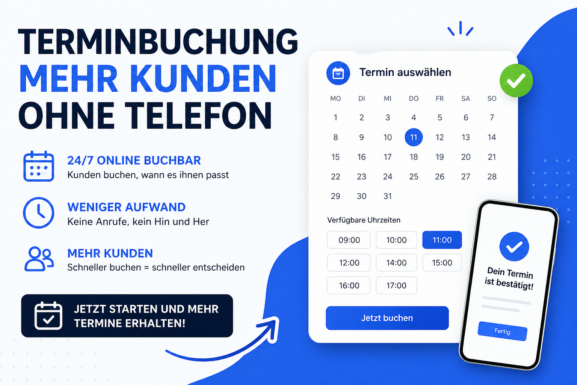

An advertisement as a central point of contact for customers?
In an increasingly digital world, customers expect clear information, quick responses and easy contact options. This is precisely where a well-structured advertisement is becoming increasingly important as a central point of contact. Instead of leading interested parties through several channels, forms or intermediaries, an advertisement bundles all relevant information in one place.
But why is an advertisement so effective as a central point of contact – and what added value does it offer for companies, service providers and customers?
Clarity instead of information chaos
Many potential customers abandon inquiries because information is scattered or confusing. Different websites, social networks or external platforms make orientation difficult.
An advertisement as a central point of contact creates clarity:
- All important information at a glance
- Clear contact options
- Clear responsibility
This means less effort for customers and fewer lost inquiries for providers.
A central point of contact strengthens trust
Trust is created where information is transparent and easily accessible. An advertisement that serves as a central point of contact conveys professionalism and seriousness.
Customers know immediately:
- who the provider is
- how it can be reached
- what is offered
This transparency lowers inhibition thresholds and increases the likelihood of direct contact.
Shorter distances lead to more inquiries
Every additional forwarding is a potential point of abandonment. If an advertisement is used as a central point of contact, unnecessary intermediate steps are eliminated.
The result:
- Faster requests
- more direct communication
- Higher response rate
This has a positive effect on conversion, especially in the B2B sector or for services that require a decision.
Advertisements bundle communication and content
A modern advertisement is more than just a short ad. It can function as a mini-landing page and bring together different content:
- Description of the service or product
- Contact options (e.g. chat, form, telephone)
- Further information
- Clear call to action
The advertisement thus becomes the central communication hub between provider and customer.
Direct contact instead of mediation
Advertisements that enable direct contact reduce dependency on intermediaries. Customers communicate directly with the provider, without detours or loss of information.
Advantages of direct communication:
- faster answers
- fewer misunderstandings
- more personalized approach
This not only increases the closing rate, but also the quality of the customer relationship.
Consistent user experience for customers
When an advertisement is used as a central point of contact, customers experience consistent user guidance. They do not have to switch between different platforms or search for information.
A clear structure ensures that:
- Keeping content understandable
- Making decisions easier
- Trust is built
This uniformity is an important factor, especially for returning customers.
Advertisements as part of a sustainable strategy
A central advertisement can be used and optimized in the long term. It can be regularly updated, expanded or supplemented with additional information without losing its function as a contact point.
This makes the advertisement ideal as a:
- Permanent contact point
- Supplement to marketing measures
- Link between content and contact
Conclusion
An advertisement as a central point of contact offers both customers and providers clear advantages. It bundles information, shortens decision-making processes and promotes direct communication. At a time when simplicity and transparency are becoming increasingly important, the advertisement is evolving from a classic display format into a strategic tool for sustainable customer contacts.
Using advertisements as central contact points creates structure, trust and better conditions for successful business relationships.