How to manage requests in a structured rather than chaotic way More overview and faster responses for service providers?
Many service providers are familiar with this problem: inquiries come from different directions at the same time. Some customers write via a contact form, others send an email or a message via WhatsApp. Sometimes someone calls at the same time as a new inquiry lands in their inbox.
Without a clear system, chaos quickly ensues. A request gets lost, an answer comes too late or important information is missing.
This problem can be avoided with a simple structure.
Why unorganized requests are a problem
When requests are received in a disorganized manner, several typical difficulties arise:
- Messages are lost in the e-mail inbox
- Customers wait too long for an answer
- important details are missing
- Orders are confirmed twice or not at all
This looks unprofessional to customers. They then often turn to the next provider.
Small companies in particular can hardly afford this.
The first step: clear request channels
The most important step is to bundle inquiries via as few channels as possible.
Instead of managing messages from five different sources, it makes sense to use two main channels:
Contact form on the website
direct e-mail or telephone
This makes it easier for service providers to maintain an overview and react more quickly.
Query important information directly
A good inquiry form should already contain the most important information.
For example:
Name of the customer
City or region
Desired service
Brief description of the problem
Desired date
This structure saves time. The service provider does not have to write several messages to ask for the same information.
Sort requests immediately
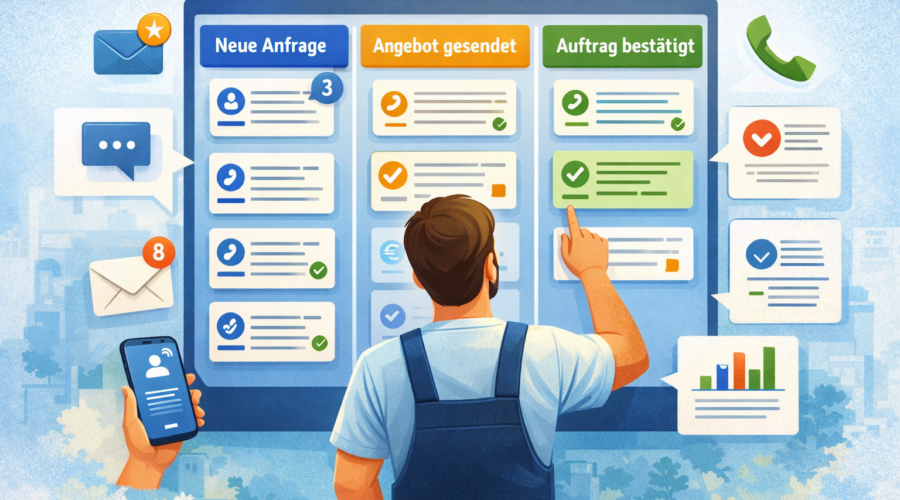
A simple trick helps many service providers enormously: sort requests directly according to receipt.
For example, in three categories:
New request
Offer sent
Order confirmed
With this simple structure, you can always see which request is still open.
Quick response increases the chances
Studies and experience show that customers often choose the provider who responds first.
A brief response is often enough:
Thank you for your request
I will check the details and get back to you shortly
The customer then knows that their request has been received and is being taken seriously.
Digital advertisements as a central entry point
Today, many inquiries start via online advertisements. Customers search for a service, find an ad and make contact.
If these inquiries are received directly in a structured manner, a simple advertisement quickly becomes an efficient channel for new orders.
Local platforms in particular can help to connect customers and service providers without detours.
Conclusion
Chaotic inquiry management costs time and orders. With a simple structure, customer inquiries can be processed much more efficiently.
Fewer channels, clear information and a quick response ensure that an inquiry turns into a new order more quickly.
And that is precisely the goal of every service provider.